


News

ADW introduces a system-level thermal management solution portfolio targeting emerging high-growth sectors in AI and embodied intelligence. The company’s three core products—a liquid cooling flow sensor for AI servers, a piezoelectric micropump, and a micro jet fan—are designed to address critical thermal challenges in high-performance computing, advanced semiconductor devices, and robotic joint systems.

Liquid Cooling Flow Sensor for AI Servers: The “Sentinel” of Thermal Systems
With the widespread adoption of high-performance chips such as NVIDIA H100, single-chip power consumption exceeding 700W has become increasingly common. Traditional air cooling solutions are reaching their limits, accelerating the transition toward full liquid cooling systems.
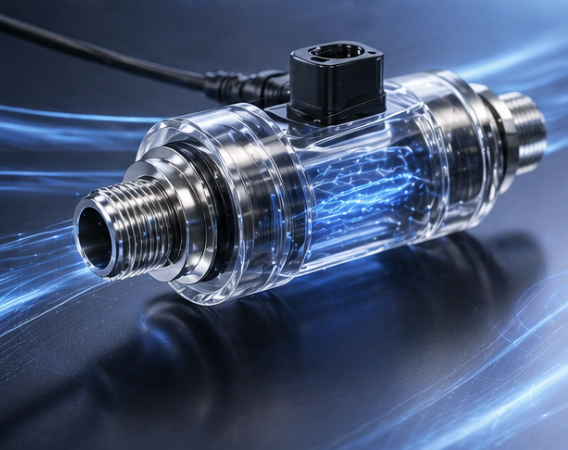
ADW’s flow sensor integrates both ultrasonic and vortex flow measurement technologies. The vortex-based solution is specifically optimized to mitigate gas bubble interference commonly found in liquid cooling environments. Even under complex gas-liquid mixed conditions, the sensor maintains measurement accuracy within ±3%, combined with a rapid response time of ≤1.5 seconds. It enables real-time monitoring of both main and branch flow circuits, ensuring stable thermal performance under stringent PUE requirements in modern data centers.
The sensor also features advanced intelligence capabilities:
Each unit is equipped with an embedded MCU integrating AI-based architecture.
Bidirectional data flow enables continuous optimization: operational data is transmitted to CPUs/GPUs for algorithm training, and updated models are deployed back to the sensor via OTA, enabling ongoing performance evolution.
Piezoelectric Micropump: Redefining Cooling Power
Based on the inverse piezoelectric effect, ADW’s micropump eliminates traditional motor structures, achieving an ultra-compact size of just 7 × 7 × 1.4 mm. Its power consumption is only one-tenth that of conventional electromagnetic pumps, while delivering zero noise and no electromagnetic interference.
This makes it an ideal thermal management solution for high-end smart devices, including smartphones, laptops, and AR/VR systems, providing a compact, silent, and interference-free cooling core.
Micro Jet Fan: Solving Thermal Challenges in Robotic Joints
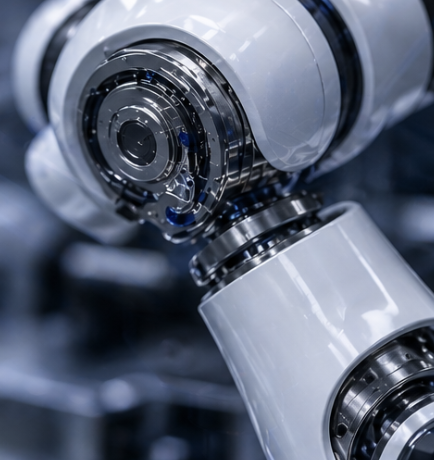
To address the thermal constraints in embodied intelligent robots, ADW has developed a Micro Ultra Airflow Fan (MUAF). Robotic joints have extremely limited internal space, and motors can generate instantaneous temperatures exceeding 120–150°C during peak operation.
Traditional bearing-based centrifugal fans are prone to wear and failure under high-frequency vibrations. ADW’s micro jet fan eliminates bearings entirely, using high-frequency vibration of piezoelectric ceramics to generate directed airflow.
With a thickness of only 2.8 mm and a weight of 8.5 g, the fan delivers up to 300 Pa of back pressure, rapidly reducing internal joint temperatures from critical levels to a safe operating range around 60°C. Future structural and process innovations are expected to enable maintenance-free thermal systems, supporting long-term stable robot operation.
Integrated System Solution: Intelligent Thermal Management Architecture
As chip heat flux density approaches physical limits and embodied robotics introduces system-level thermal challenges, ADW leverages over two decades of expertise in sensing and actuation technologies.
By combining sensing (sensors) and execution (actuators), ADW has developed a comprehensive intelligent thermal management system covering:
Heat extraction
Heat transfer
Heat dissipation
This integrated approach enables efficient and adaptive thermal control across complex application scenarios.
Strategic Vision: “O + X” for the AI Era
ADW’s “O + X” strategy reflects its evolution toward the AI and embodied intelligence era:
O (Original): Established strengths in smart automotive, smart home, smart terminals, and intelligent manufacturing
X (Extension): Expansion into AI infrastructure and core hardware for embodied intelligence
The company focuses on advancing core capabilities in perception and actuation layers, strengthening competitiveness across R&D, capital investment, and manufacturing capacity.
Aligned with the evolution of AI—from computing power enhancement, to widespread adoption of intelligent assistants and embodied systems, and ultimately to the digitalization of physical space—ADW is developing sensor technologies accordingly:
Current focus: high-performance computing scenarios
Next phase: embodied intelligence
Future: spatial intelligence
A High-Growth Market with Strategic Significance
According to Frost & Sullivan, the global thermal management solutions market is expected to exceed RMB 400 billion by 2029, with a compound annual growth rate of over 20%.
ADW’s entry into this rapidly expanding market marks a strategic transformation—from a component manufacturer specializing in sensors and actuators to a provider of core hardware for AI and embodied intelligence systems.
Looking ahead, ADW will continue to focus on the foundational needs of advanced AI, leveraging its sensing and actuation technologies to build critical infrastructure for the next generation of intelligent systems.
 Come Back